A tree-planting robot can place a seedling in the ground, but that single action says little about the result. Without verified field data, the useful question is what the full system can measure, repeat, and maintain after the machine leaves.
- Planting speed matters less than tree survival.
- Soil, roots, slopes, and debris can stop a machine before planting starts.
- A serious trial should report cost per surviving tree.
The planting job is more than a hole
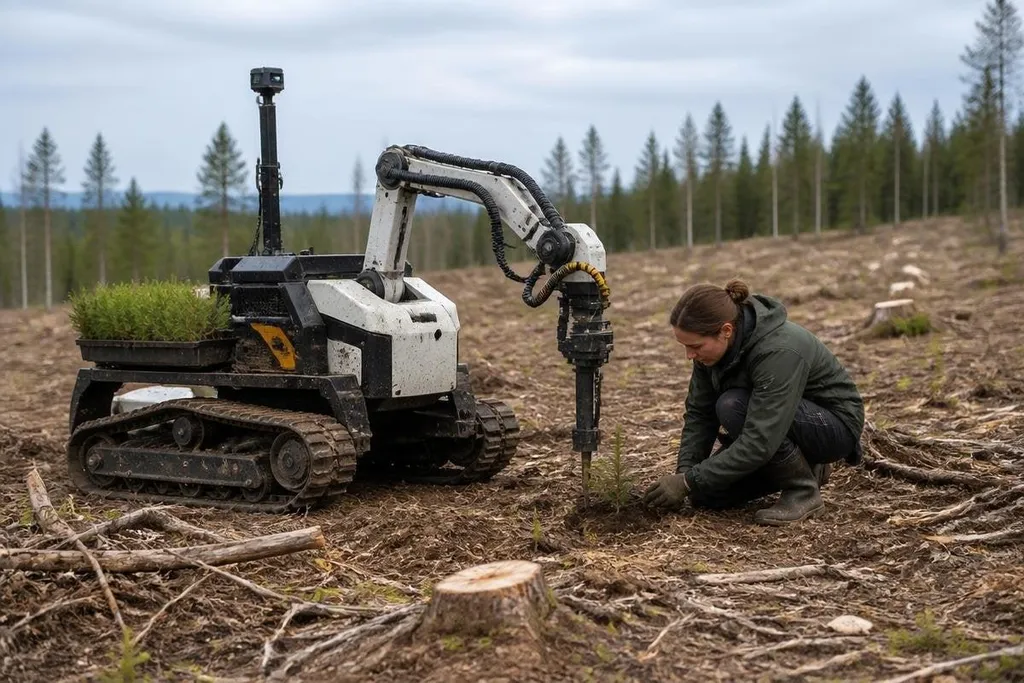
First, it needs to reach a suitable spot. Then it must clear surface growth, make a hole at the right depth, place the seedling without damaging its roots, and close the soil around it.
Every step affects the next. A shallow hole can leave roots exposed, while loose soil may let the seedling shift before it takes hold. Speed cannot repair a poor planting site.
Forest sites may add slopes, rocks, fallen branches, wet soil, and thick plant cover to that work. The machine needs a way to detect those conditions before it commits to a planting point.
A useful system may also need to carry seedlings, water, tools, or protective material. Those loads add weight and change how the robot moves over soft ground. Any claim about output needs the load, terrain, crew size, and work hours beside it.
Where sensing matters
A planting robot needs location data and close-range sensing. Satellite positioning can mark a broad area, while cameras or other sensors help the machine judge the ground beside the planting point.
Tree spacing adds another task. The robot must follow the site plan without placing seedlings in rock, standing water, or areas reserved for roads and power lines. Under tree cover, satellite signals can weaken, so the system needs a backup method for keeping its position.
The machine also has to tell a seedling from loose material and living plants. That decision affects both planting quality and site protection. A system that clears too much ground may damage the habitat it was meant to support.
A planting count can hide the work that follows each seedling. Reports at Robot24.com can tie a tree-planting robot’s result to soil type, spacing, and the human checks after planting. That record leads to the number that matters after planting: how many seedlings remain healthy.
The number that matters after planting
Counting planted trees gives only an early result. A proper trial should check whether the seedlings remain upright, keep contact with the soil, and survive through the site’s first dry or cold period.
The time window matters. A report that ends when the robot finishes its route cannot show survival. It should state when the trees were checked, how many were alive, and how the result compares with trees planted by workers under the same conditions.
Cost needs the same care. The figure should include transport, charging or refueling, operators, repairs, seedlings, and site preparation. A robot that places more seedlings per hour may still cost more per surviving tree if it needs frequent stops or extra workers.
No evidence pack is available for a named tree-planting robot here, so there are no verified claims about speed, price, payload, battery life, or deployment. Those numbers should come from a dated field report, a maker’s technical sheet, or an independent trial.
A checklist for judging a trial
Use these questions before treating a planting robot as ready for field work:
- Site conditions: Were slope, soil type, rocks, debris, and plant cover recorded?
- Full task: Did the robot handle site choice, hole making, planting, and soil closure?
- Human work: How many people prepared, watched, supplied, or repaired the system?
- Output measure: Does the report count surviving trees as well as planted trees?
- Cost record: Are transport, power, maintenance, seedlings, and labor included?
- Repeat runs: Did the test cover more than one route or planting day?
The strongest report will also say what failed. A jammed tool, missed planting point, damaged root ball, or position error tells buyers where the design still needs work.
What should happen next
The next useful step is a public field trial with fixed conditions and a follow-up check months after planting. Until those results include survival and full operating cost, I’d wait before treating planting speed as proof that a tree-planting robot works.
The number worth watching is cost per living tree after the first growing season.